
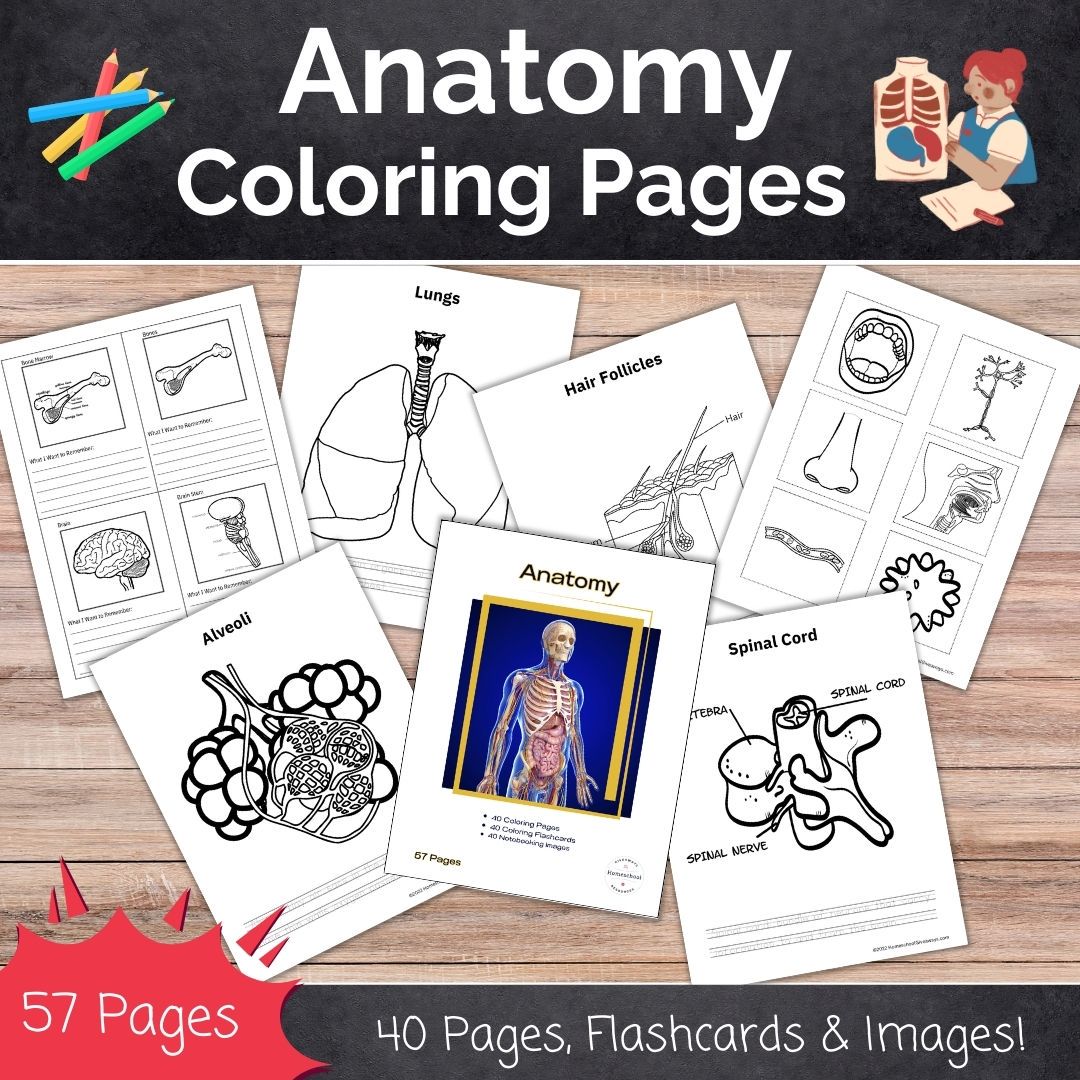
As a medical student, I’ve always struggled with memorizing the intricate details of human anatomy. Textbooks felt overwhelming, and flashcards only scratched the surface. That’s when I stumbled upon an anatomy coloring book. At first, it seemed too simple—coloring? For medical study? But after incorporating it into my routine, I realized it wasn’t just about filling in shapes. It was about actively engaging with the material, layer by layer, until the structures became second nature. The process forced me to slow down, focus, and truly understand spatial relationships in a way passive reading never could.
Why Coloring Works for Anatomy
The science behind coloring is rooted in kinesthetic and visual learning. When you color, you’re not just passively observing; you’re physically tracing the boundaries of muscles, nerves, and organs. This tactile engagement reinforces memory retention. For instance, I distinctly remember spending an hour shading the deltoid muscle and its origins—a detail I’d glossed over in textbooks. Weeks later, during a practical exam, that image was crystal clear in my mind. Studies even suggest that combining visual and motor skills enhances long-term recall, making an anatomy coloring book more than just a study tool—it’s a memory anchor.
Choosing the Right Anatomy Coloring Book
Not all coloring books are created equal. Some are overly simplistic, while others border on anatomical atlases. I’ve tested several, and the best ones strike a balance between detail and accessibility. Look for books with clear, labeled diagrams and enough white space to add your own notes. For example, the Netter’s Anatomy Coloring Book pairs intricate illustrations with concise explanations, making it ideal for intermediate learners. Beginners might prefer something with simpler outlines, while advanced students could opt for books focusing on microscopic anatomy or clinical correlations.
Key Features to Look For
- Accurate, detailed illustrations
- Clear labeling of structures
- Space for annotations
- Clinical or functional notes (optional)
Integrating Coloring into Your Study Routine
Here’s the thing: coloring isn’t a standalone solution. It’s most effective when paired with other study methods. I’ve found that alternating between lectures, dissection, and coloring sessions keeps the material fresh. For example, after a dissection lab, I’d revisit the corresponding page in my anatomy coloring book to reinforce what I’d seen in 3D. This multi-modal approach ensures you’re not just memorizing shapes but understanding their function and context.
💡 Note: Avoid rushing through pages. The goal isn’t to finish the book but to internalize the anatomy. Spend at least 20 minutes per diagram, referencing your textbook or atlas as needed.
Common Mistakes to Avoid
One mistake I made early on was treating coloring as a passive activity. Simply staying within the lines doesn’t guarantee learning. You need to actively question each structure: What’s its function? How does it connect to neighboring tissues? Another pitfall is relying solely on the book’s labels. Always cross-reference with other resources to ensure accuracy. For instance, I once colored the ulnar nerve incorrectly because I’d misread a label—a mistake I caught only after reviewing my notes.
Beyond the Basics: Advanced Applications
Once you’re comfortable with the basics, consider using your anatomy coloring book for more advanced study. Add color-coding for different tissue types, or use arrows to trace nerve pathways. I’ve even seen colleagues laminate pages to annotate with dry-erase markers, turning static diagrams into interactive study aids. Honestly, the versatility of this tool is what makes it so valuable—it adapts to your learning style and pace.
While an anatomy coloring book isn’t a magic bullet, it’s a surprisingly effective way to deepen your understanding of the human body. It’s taught me that learning anatomy doesn’t have to be a grind—sometimes, a little creativity goes a long way. Next time you hit a study wall, grab your colored pencils and give it a try. You might just find that the act of coloring helps you see the bigger picture.
Related Terms:
- human anatomy coloring book
- free printable anatomy coloring book
- anatomy coloring book pdf
- kaplan anatomy coloring book
- anatomy coloring book wynn kapit
- printable anatomy coloring book


